Connected Motorcycle Consortium
  • Home
    • Members
  • Safety
  • Applications
  • Basic Specification
    • Overview
    • Assessment
    • Use Case Specification
    • Application Specification
    • System Specification
    • Evaluation Report
    • Other standards
    • HMI
    • Roadmap
  • Research
    • Accidentology
    • Conspicuity
    • Rider Reaction Time
    • Path Prediction
  • Demo
  • News
  • Downloads

News archive

Accurate localisation for motorcycles remains a challenge

11/4/2019

 
Real-life tests conducted
Motorcycles are usually less than 1 metre wide and their position within their lane is an important information to determine critical situations. In other words, it makes quite a difference if a rider keeps left or right in his lane. The Connected Motorcycle Consortium conducted several real-life tests both on public roads and in confined test environments at Technische Hochschule Ingolstadt (THI).
These tests were done with today’s GNSS localisations systems* in order to verify performance of these systems and to deduct CMC requirements for future safety applications on motorcycles.
* GNSS stands for Global Navigation Satellite System. Examples of such systems with global coverage are GPS from the U.S.A. and GLONASS from Russia. By 2020, BDS from China and Galileo from the E.U. should be operational as well.
Setting up the test units
 Test outcomes
As to be expected, currently used automotive satellite systems do not provide enough accuracy on lane specific positioning. Furthermore, it turned out that the calculation of the motorcycle trajectory under weak satellite signals – the so-called ‘dead reckoning’* - is more demanding compared to cars.
* In navigation, “dead reckoning” is the process of calculating the current position by using a previously determined position, or fix, and advancing that position based upon known or estimated speeds over elapsed time and course.

Parameters not usable as in case of cars
While for cars, steering angle and differential speed of wheels are key information to calculate a trajectory, for motorcycles, both are not available and not really useful. The differential speed of a motorcycle’s front and rear wheel does not indicate any directional change. Moreover, motorcycles do not have steering angles, which would allow calculation of their trajectory, since motorcycles are steered by inertia. Leaning angle, speed and most important centre of gravity are key parameters. Particularly centre of gravity is very difficult to measure, since the rider and his positioning on the bike have a massive influence on it.
Picture
Testing in action
Common standard needed
Raphael Riebl from THI is convinced: “We still have lots of work to do to solve the ‘dead reckoning’ issue for motorcycles. Furthermore, it is essential, that we do this together in CMC with all manufacturers involved. Only if we can decide on common standards and test methods, we can assure the same dependable level of accuracy in positioning of every motorcycle on the road.”
He contemplates: “Moreover, it is understood that only then we can go ahead with actual safety critical applications. So as an important next step we have to define a motorcycle-specific test scenario which includes the requirements for dead reckoning."

CMC gets interest from press and public at Intermot

17/10/2018

 
Picture
CMC booth at Intermot, showing car and motorcycle communicating to each other directly
This international motorcycle show provided an opportunity for the Connected Motorcycle Consortium to demonstrate what is possible with ‘wireless’ safety applications for motorcycles.
“We were interviewed by several magazines and TV channels”, says Hennes Fischer, responsible for Promoting and External Relations of the consortium.
“It was also a first chance for us to appeal to the general motorcycle public. That was very motivating for us, because when we showed what this technology can do, people were really positive! Especially the fact that car drivers would be warned that a motorcycle is nearby is very much appreciated. Almost every motorcyclist can tell stories about the shocking moments when a car driver didn’t see him or her, so this is quickly understood as a huge benefit!”
To create the demonstration, CMC was assisted by a new supporter, the global IT service provider Luxoft which developed the demo software for the user interface on the show car.
The CMC demonstration was part of a special interest-area called the “Connected Motorcycle World” where also other organisations showed new and interesting technologies for motorcycles in the future.
Hennes adds “When talking to people, an interesting thing that came out was the concern if the data would be stored, or who could see it. Clearly, data privacy is an important issue with this new technology so it will be important for us as manufacturers to take good care of that when developing these future systems.”

CMC introduces the Connected Motorcycle World at Intermot

27/8/2018

 
Picture
For the first time, the Connected Motorcycle Consortium will demonstrate connectivity and safety applications for motorcycles at a consumer show.
Thomas Bischof, coordinator in CMC says: “Together with other stakeholders in motorcycle connectivity, we will demonstrate safety applications designed for motorcycles. We’re looking forward to get the motorcycle riders opinion about these future technologies. In particular, the system that warns car drivers that motorcycles are nearby, might inspire the riders. As we know, the other vehicle driver not seeing the motorcycle causes a majority of motorcycle accidents. Our systems will warn the car driver, when a critical situation occurs!”
 
The International motorcycle show Intermot takes place from 2nd to 7th October 2018 at the Koelnmesse in Cologne, Germany. The CMC stand, which is called ‘Connected Motorcycle World’ will be located in Hall 6, Stand number A040/B047.
CMC representatives will be available to visitors to demonstrate the connectivity applications on a motorcycle. Also, presentations are foreseen during the show, where more background information about the consortium and the technology will be given.
Picture
Next to the safety technologies demonstrated by CMC, across the 250 square metres of exhibition area one can try out the smartest technologies relating to motorcycles:
  • in-helmet head-up displays,
  • headsets for group talks,
  • automatic emergency calls,
  • apps that link them all together... 
Biking will be safer and more relaxed than ever!

The CMC exhibits at the 2018 OECD International Transport Forum

3/6/2018

 
The Connected Motorcycle Consortium (CMC) participated at the 2018 edition of the OECD International Transport Forum in Leipzig, Germany. During the event, titled “Transport Safety and Security”, CMC experts discussed with attendees the potential of connected intelligent transport systems (C-ITS) to improve motorcycle safety, the need for interoperable C-ITS applications as well as the risks and benefits of car automation for motorcyclists’ safety. Commenting on the discussions that took at the Forum, Hennes Fischer, Senior Adviser to Yamaha Motor Europe says: “We are delighted to be here today at the ITF Transport Fortum to show the results of the work of the members of the Consortium. Connected mobility will be a key feature of future transport systems, and we need common basic specifications for motorcycle ITS. Our main objective over the coming years will be to develop as many cross-manufacturer standards as possible”.
Picture
Picture
Dr. Veneta Vassileva talked about ACEM safety strategy
Tomohiro Matsuda, Regulatory affairs and engineering manager for Kawasaki Motors Europe says: “The technologies in exhibition today offer a glimpse into the future of mobility. The use of cooperative safety systems for motorcycles will help us to increase safety for motorcyclists as well as riding pleasure”.
The European Association of Motorcycle Manufacturers, ACEM*, was also present at the International Transport Forum. Dr Veneta Vassileva, ACEM’s road safety coordinator, elaborated on some of the different initiatives led by the industry to improve motorcycle safety in Europe, such as the ACEM road safety strategy or the European training quality label, that aims at promoting high quality post license training schemes across the EU.
Moreover, the Secretary General of the International Motorcycle Manufacturers’ Association, Edwin Bastiansen, delivered a presentation about motorcycle safety at an international level.

*ACEM, the European Association of Motorcycle Manufacturers represents manufacturers of mopeds, motorcycles, three-wheelers and quadricycles (L-category vehicles) in Europe and is associate member of CMC.

CMC and ACEM at the 2018 OECD International Transport Forum

8/5/2018

 
The Connected Motorcycle Consortium (CMC) and the European Association of Motorcycle Manufacturers (ACEM) will participate in the 2018 edition of the OECD International Transport Forum that will take place between 23 and 25 May in Leipzig, Germany.
The theme of the Forum will be “Transport Safety and Security” and it will address a wide range of issues including: connected vehicles,  planning and design of safety transport systems, road infrastructure and safety management and the link between economic activity and road safety trends.
Motorcycle safety experts from the CMC and ACEM* will be present at the 2018 International Transport Forum to elaborate on some of the different initiatives led by the industry to improve motorcycle safety in Europe, CMC experts will discuss with attendees the potential of connected intelligent transport systems (C-ITS) to improve motorcycle safety, the need for interoperable C-ITS applications as well as the risks and benefits of car automation for motorcyclists’ safety.
Moreover, the Secretary General of the International Motorcycle Manufacturers’ Association will deliver a presentation on the situation of motorcycle safety at an international level.
Picture

New members and wider focus

19/3/2018

 
CMC work is supported now by seven world leading motorcycle manufacturers. The Italian make Ducati has joined the consortium recently, following KTM from Austria, next to Japanese makers Kawasaki and Suzuki. BMW Motorrad, Honda and Yamaha remain the core members and have been the driving force to establish CMC.
CMC can now also welcome a major player in automotive connectivity. Autotalks is known for its top end developments in vehicle communication systems and will actively support CMC as Development Member.
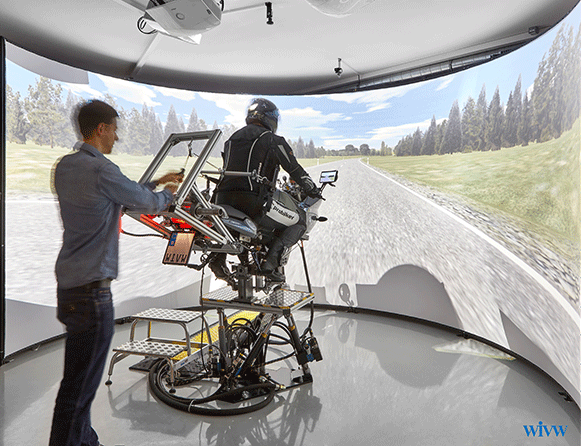
Under its WG Unification & Interoperability, CMC has established a special task group dedicated to evaluation of HMI criteria in the context of C-ITS messages. Together with CMC member WIVW (Würzburg Institute for Traffic Science) 2 riding simulators are used to investigate the optimal information strategy and evaluate warning timing for various C-ITS functions.

Picture

CMC discuss the future of connected motorcycling at ITS World Congress

22/11/2017

 
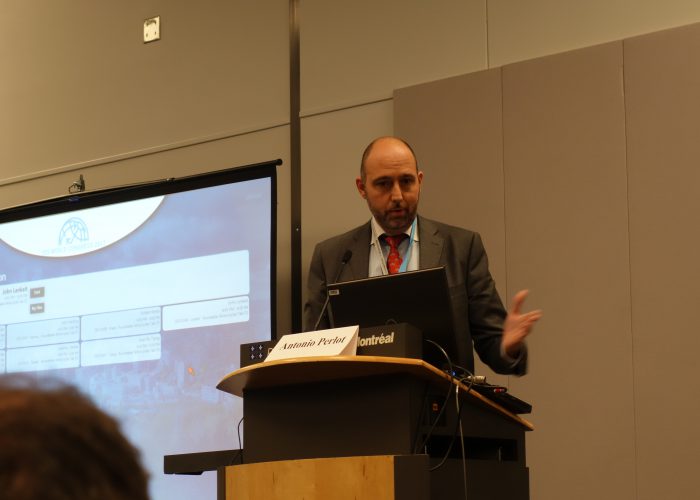
Experts from CMC and the motorcycle industry, the European Commission, the U.S. Department of Transportation and other organisations met at the ITS World Congress in Montreal, Canada, to discuss the future of intelligent transport systems and motorcycling. The discussions took place during the ‘Motorcycle talk ITS’ roundtable moderated by Antonio Perlot, Secretary General of the European Association of Motorcycle Manufacturers (ACEM), being member of CMC. The participants examined some of the most important initiatives in the field of connected vehicles as well as the challenges and opportunities offered by cooperative ITS.

More information in Newsletter #3

Picture

CMC initiates special session on motorcycles

3/10/2017

 
For the first time, a dedicated session on motorcycles has been organized based on a CMC initiative at the next edition of the ITS World Congress in Montreal. The European Association of Motorcycle Manufacturers will support a roundtable titled ‘Motorcycle talk ITS’. The discussions will be moderated by the ACEM Secretary General Antonio Perlot and will take place on 1 November at the Palais des Congrès Convention Center, Montreal, Canada.
Motorcycle industry experts, including representatives of CMC, European, Asian and American policy-makers and other stakeholders will discuss key issues as: the potential of C-ITS to significantly improve motorcycle safety, the risk of transferring ADAS from cars to motorcycles without dedicated engineering solutions, the need for interoperable C-ITS applications, as well as the impact of automated cars on motorcycle safety.
CMC will have a booth in the exhibition hall and contribute furthermore with technical presentation to a special interest session on motorcycles preceding the round table talks.

Picture

Motorcycle topics for U.S.

14/7/2017

 
Picture
For the first time a Motorcycle Consortium dedicated to ITS issues has joined the ESV conference in Detroit. CMC members used the opportunity during conference to speak directly to US rule makers, associations and the industry about the specific requirements for motorcycles regarding ITS implementation. Many have visited the CMC booth in the exhibition area. Since US has just passed a ‘Notice of proposed rulemaking’ for ITS deployment mainly aimed at cars, the motorcycle industry took up the challenge to bring their issues to the attention of US officials and other stakeholders. The appearance of CMC in US was very well received.
Later this year, CMC will be present at the ITS World Congress in Montreal. For the first time a special session on motorcycles is supported by the consortium together with ACEM, the Association of European Motorcycle Manufacturers and other stakeholders.
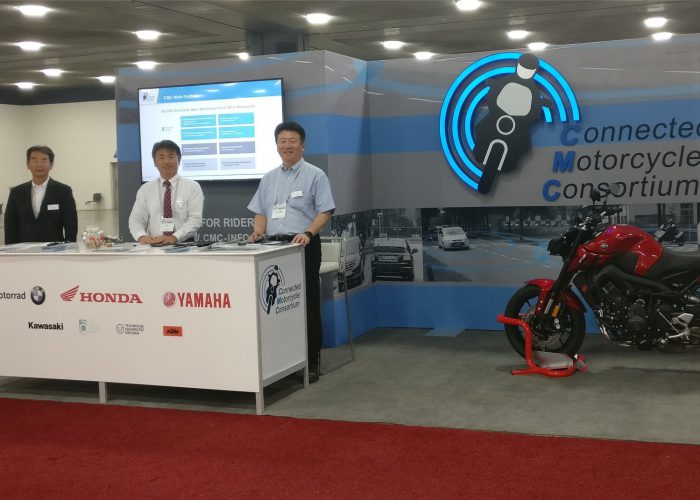
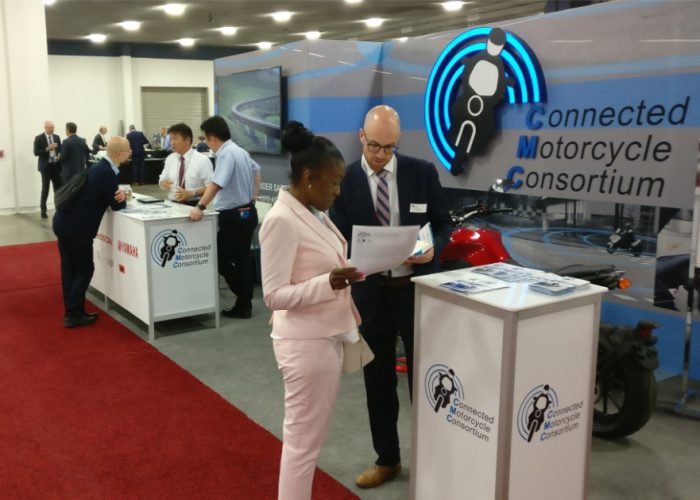
CMC went ESV 2017

21/6/2017

 
Picture
In June 2017 the Enhanced Safety of Vehicle (ESV) Conference took place in the ‘MotorCity’ Detroit.
At the CMC booth – located in the exhibition area of the CoBo Center – representatives of several CMC members informed interested Conference attendants about objectives, focus, outcomes and Consortium membership.
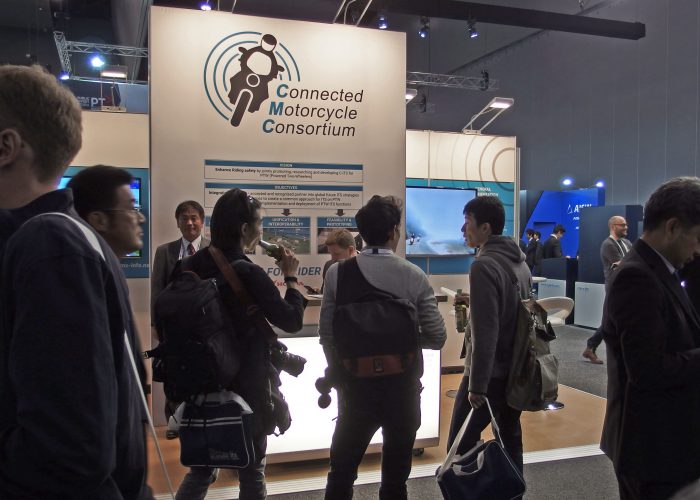
ITS World Congress 2016 – with participation of CMC

11/11/2016

 
Picture
Picture
Picture
Picture
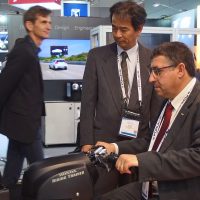
Many visitors of the ITS World Congress 2016 in Melbourne, Australia (October 10-14, 2016) used the opportunity to collect more information about the current work and planned projects of the Connected Motorcycle Consortium. At our stand in the Exhibition hall our guests also had the chance to test a simulation of various ITS functions in the PTW field.
CMC at the Annual Conference of ACEM

30/9/2016

 
Picture
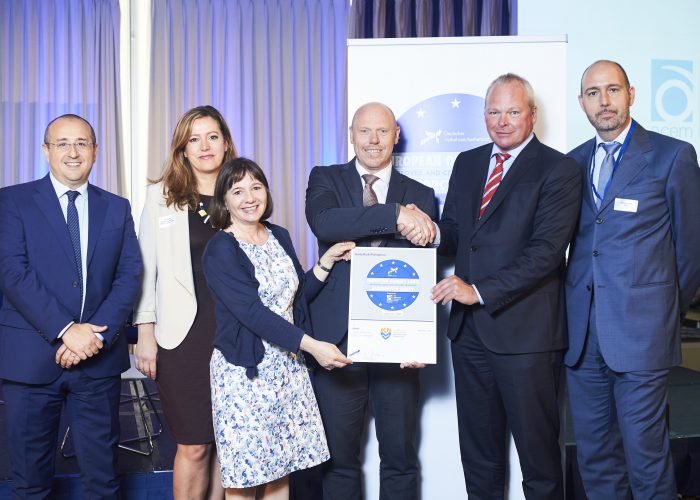
In September 2016, CMC attended the Annual Conference of ACEM to provide to its members with info about the vision, organization and participation in this development partnership.
BMW, Honda and Yamaha form Connected Motorcycle Consortium

30/9/2016

 
Picture
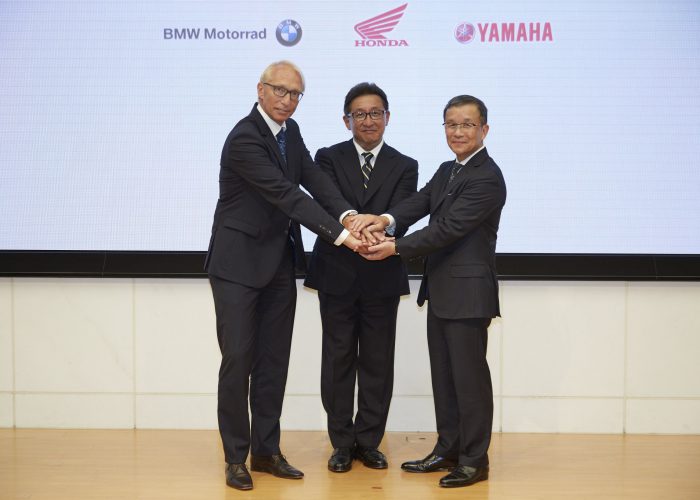
BMW Motorrad, Honda and Yamaha initiate the "Connected Motorcycle Consortium" in 2015
At the ITS World Congress 2015 in Bordeaux the motorcycle industry took a major step toward the “connected bike” when three major OEMs announced the launch of the initiative “Connected Motorcycle Consortium” to support the development of Cooperative-Intelligent Transport Systems (C-ITS) applications in motorized two-wheelers.
(Picture from left: Dr. Karl Viktor Schaller of BMW Motorrad; Tetsuo Suzuki of Honda Motor Co; and Takaaki Kimura of Yamaha Motor Co.)

Forward>>

    Archives

    October 2025
    June 2025
    January 2025
    July 2024
    May 2024
    October 2023
    May 2023
    January 2023
    November 2022
    September 2022
    April 2022
    December 2021
    September 2021
    May 2021
    February 2021
    December 2020
    October 2020
    April 2020
    December 2019
    September 2019
    June 2019
    April 2019
    October 2018
    August 2018
    June 2018
    May 2018
    March 2018
    November 2017
    October 2017
    July 2017
    June 2017
    November 2016
    September 2016

    RSS Feed

COPYRIGHT 2026 Connected Motorcycle Consortium

PRIVACY POLICY

Contact Us

    Subscribe to our newsletter!

Submit
  • Home
    • Members
  • Safety
  • Applications
  • Basic Specification
    • Overview
    • Assessment
    • Use Case Specification
    • Application Specification
    • System Specification
    • Evaluation Report
    • Other standards
    • HMI
    • Roadmap
  • Research
    • Accidentology
    • Conspicuity
    • Rider Reaction Time
    • Path Prediction
  • Demo
  • News
  • Downloads